

For Mom

Yesterday marked the shloshim, or the thirtieth day, since my mother’s burial. Although, in Judaism, the mourning period for a parent is a full year, it ends after thirty days for everyone else. Still, I somehow thought I should recognize the day and share the eulogy I wrote for her funeral. I promised then that I’d keep working on it, and I have. This is for mom.
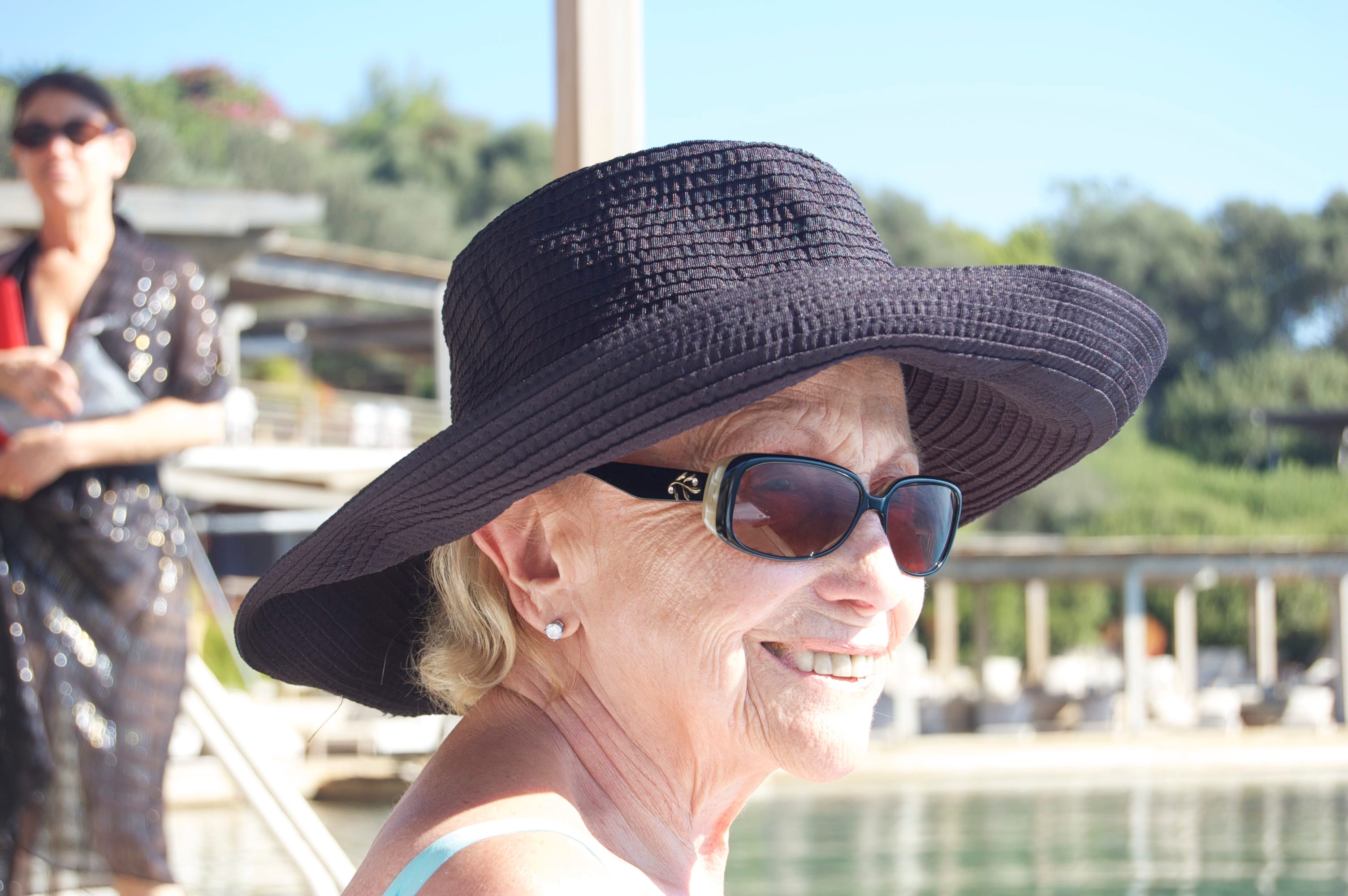
Usually when you eulogize someone you look for a word or words that can help sum up the person. At my dad’s funeral, I described him as the ultimate kibbutzer and that seemed to do the trick. For my mother, all you need is four letters: F-O-M-O, FOMO. The fear of missing out. If there was anything you could say about Adeline Nina Smith, it was that did not want to miss out on a single thing.
We always laughed about the simple ways her FOMO showed up. Those of you who have eaten a meal or shared a cup of her beloved coffee with her know exactly what I mean. If you had a latte, she’d have a latte. If you ordered the lamb, she’d order the lamb. And if she was dining with a large group of people, she’d ask the waiter to take her order last. Partly, she did so because she generally had a hard time making a decision but she also did so because she wanted to make sure she knew what everyone else was ordering first. Even then, she spent the rest of meal wondering if she had ordered the right thing.
When she had been in the hospital for a few days this last time, I came to her room and was sitting beside her drinking a latte and eating a Starbucks spinach wrap. It was three days since she had been admitted, and she hadn’t been eating, nor had she been fully lucid. But somehow she looked over at me, looked at the cup and the sandwich in my hand, and asked, barely able to get the words out, “What are you eating?” I told her and asked, mostly kidding, if she wanted some, and just as I had seen her do a million times, she shrugged and said, “OK.”
That fear of missing out didn’t just apply to food. She always wanted/needed to be part of the action, wherever the action was. Despite being shy and reserved, she never missed a party to which she was invited even if it was to watch quietly and observe what was happening. My father was considered to be the social half of their equation, someone who loved being around people and was continuously doing the one thing that earned him that sobriquet at his funeral, kibbutzing. But my mother was more than a willing participant, even if her motives were slightly different. Sure, she wanted to schmooze a little, see friends, laugh, and enjoy a night out. But she also wanted to see what everyone was wearing, know what was served for dinner, see how the table was set, and see if someone’s decorating skill had surpassed her own.
Such motivations didn’t slow down in her later years. At Vi, the independent living facility she moved into when she was 84 years old, she immediately jumped into the social activities. She continued to volunteer as an usher at the Kravis Center for the Performing Arts in West Palm Beach, Florida, something she did for more than ten years, continued her subscriptions to the theater and the live opera, but also signed up for every lecture and trip and joined numerous committees. She was often so busy we’d go full days unable to find her. One of us would have to call the Vi concierge, Larry, to ask if he had seen her, only to find out she was off playing rummicube, having lunch with a friend in the cafe, on a trip to the outlet center, or listening to a lecture on one of the many composers she loved.
She even became somewhat of a yoga aficionado in her later years. My mother had never been much of an exerciser but, once she discovered chair yoga, she became a devotee. While she loved getting calls from her family, if you happened to call at 10:00 a.m. on a Tuesday, Thursday, or Saturday, she’d less than reluctantly brush you off. “Honey, I love you and I want to talk to you but I’m running to chair yoga,” she’d tell me. One of her biggest disappointments when she moved into her new place was that they did not offer chair yoga.
It took my writing this to figure out what her FOMO was all about: what she truly did not want to miss out on was life. As shy, quiet, and reserved as she was, she always wanted to live life to the fullest. To do so, she looked to everyone around her for guidance. She wanted to enjoy the food you were enjoying, savor the wine you were drinking, dance at the same parties, and show her admiration for the clothes you were wearing.
The other word people would use to describe my mother is just as simple: sweet. She certainly lived up to the old standard eponymously named Sweet Adeline. The song, like my mother, was named after the opera singer Adelina Patti, a favorite of my grandfather’s, and whose voice was described as sweet (My mother’s voice? Not so sweet). That sweetness seemed to permeate through her reserve. Every time I met someone who knew my mother, they told me how much they loved her and described her as delightful, elegant, and warm. Indeed, she never had a bad word to say about anyone.
She was also, to be blunt, vain. I don’t mean to say that in a disparaging way. My mother never realized how beautiful she was, how striking her turquoise eyes and high cheek bones were. But she always wanted to present her prettiest self and she wanted her girls to do the same. Right now, she’s probably looking at me and thinking, “You don’t wear your contacts anymore?” (I might as well throw in honesty as another admired trait). She loved dressing up her girls in matching outfits. As much as I hated being the chubby one in our identical Danskin sets, it made me proud when our elementary school teachers would ooh and aah over the granny dresses and hot pants we wore before anyone else in school did.
But she was also a woman of contradictions. She was intelligent and intellectual but often a bit flighty (yes, the apple doesn’t fall far from the tree). She was quiet and serious but loved to be surrounded by people who made her laugh, which was the main reason why she loved my dad so much. And at just 5’1”, she had the most beautiful legs you ever saw (and, on that, the apple did fall very far from the tree).
She loved her children fiercely even if she didn’t always know exactly where we were (like the time I was in Mexico and she thought I was in Argentina), how to buy the gifts we actually asked for (something was always just a little bit off), or didn’t always know how to say the right thing at the right time. But she always let us know how proud she was of us, how sure she was that we would succeed in anything we set out to do. In fact, she always encouraged us to find our own paths, to express our creativity, and to follow our passions, encouraging me to write, Barbara to paint or decorate or do anything that took advantage of her strong eye, and Craig to play hockey.
She tried to forge her own independence while also relying on my father for so much — just as so many woman of her generation did. But she blossomed in the years after he passed away. She never stopped missing him but she learned to find her own path, continuing to volunteer as long as she was able and cultivating friendships old and new. Having her to ourselves also allowed us to forge a relationship with her that was closer and stronger than ever before. She became my anchor and I can only imagine how unmoored I am going to feel without her.
While no one would ever have called my mother a domestic goddess, she was very particular about her laundry and the way it had to be done. She had specific methods for removing every kind of stain she might encounter and, not being the neatest person, she encountered a lot of stains. She never relented until any sign of the spot had disappeared. But it wasn’t just stains. The other night, Barbara was washing the pants we wanted her to be buried in and Barbara asked if she should put the pants in the dryer. My mother, I reminded her, would put the pants in the dryer for 20 minutes on medium heat, not a minute more and not a minute less. Then she would pull them out, hang them up and let them air dry. “Yeah, I’m not doing that,” Barbara said. While I will cherish my vast inheritance — a bottle of Downy wrinkle eraser, a stick of Oxyclean stain remover, a Clorox bleach pen and various other laundry soaps and cleansers — I regret that I have not also inherited her skill.
My mom approached both her health and the aging process with the same tenacity she used for getting spots out. She was determined to find the reason for her frequent falls, coming up with myriad self diagnoses and theories, while rushing from doctor to doctor in search of a cure. That determination also made her a frequent customer at Ulta, the beauty supply store. When one of us came to Florida for a visit, going to Ulta was always at the top of the list of errands she had to run. Again, she was convinced she would eventually find the one cream that would remove every one of her wrinkles.
All of this meant that my mom was ultimately the frequent object of our teasing and jesting. But she always laughed along with us, happy to have made us smile or laugh, even if it was at her own expense.
There is no simple way to wrap this up. When you’re talking about someone who lived until 92 years old and lived those years as fully as possible, it’s hard to write just a few paragraphs to be read at a gravesite in the middle of the winter. But having the chance to look back and see how much she accomplished in those years I realize one thing: maybe we can all do with a strong dose of FOMO.
Thank you, Wendy. Of course, as soon as I posted this, I thought of so many more stories.
Ilene - So happy to learn more about your mom! I'm just so sorry for any hardships you all must have endured. Hoping all these funny and loving stories will continue to rise above and may the memories be a blessing. Sending ((((( hugs )))))) - Wendy